Sabrina’s Defection
The Cabin at the End of the WorldSabrina’s defection breaks the four visitors’ united pressure on Andrew’s family: after insisting that they must choose a sacrifice, she questions the command and offers Andrew and Eric help to leave. The turn does not bring certainty about the visions or the threatened apocalypse. Instead, it changes what Sabrina is willing to do while the family remains trapped between an imposed choice and an unknown outcome.
The ultimatum and Sabrina’s role
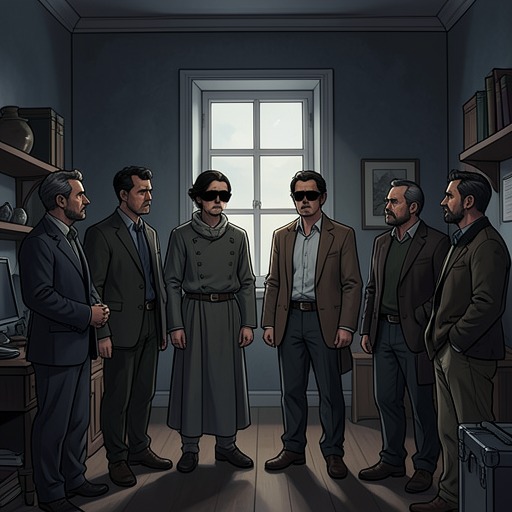
Leonard presents the family with a stark condition: Andrew, Eric, and Wen must willingly choose one of the three to die, then carry out the killing. If they refuse to choose or fail to follow through, he says, the world will end and more than seven billion people will perish. Leonard’s initially matter-of-fact delivery gives way to the fervor of a believer pleading for the family to accept what he calls an impossible choice. Andrew is frightened not only by the threat but by its implications for his family and the people beyond the cabin.
Leonard also promises that the visitors will not kill Andrew, Eric, or Wen, and says they will make the family comfortable, but only while keeping them in the cabin until they choose or their time runs out. The promise of safety is therefore bound to continued captivity and a deadline. Later, Leonard repeats the demand as a choice that will be offered again the following morning: the family can sacrifice one person to save the world, or let the clock move closer to “permanent midnight.” Sabrina is part of the group pressing that choice. When Eric tries to delay the confrontation by inviting Adriane to talk about her former restaurant jobs, Sabrina cuts across the effort: “Guys, this is it. You have to choose.”
Doubt replaces enforcement
Sabrina’s shift becomes visible in her exchange with Leonard after the situation has deteriorated. She tells him, “This should be over, Leonard,” and asks why the events that have already occurred are not enough. Their conversation makes clear that the two do not share secure knowledge of what is happening. They wonder whether they have experienced the same visions and commands, whether either of them is who they claim to be, and whether they would have considered one another good people before being called to the cabin. Their shared uncertainty does not release them from the crisis, but it unsettles the authority on which their mission depends.
Sabrina says she fought the command before and swears that she will fight it again, then declares that she can no longer continue as they have. She believes they should have done more to resist and reject what they were being asked to do. Her questions grow more direct: “Why us? Why are we being made to do this, Leonard? Why is this even happening at all?” She calls the demand barbaric and evil, and insists that the visitors are part of it. Leonard does not answer with an explanation; he says he does not understand and that they are not supposed to understand. Sabrina rejects that as an inadequate response. Her doubt is not a discovery of a competing explanation. It is a refusal to treat the absence of understanding as a reason to keep obeying.
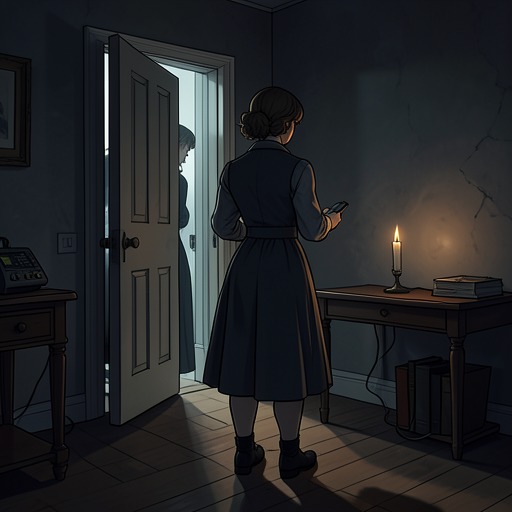
The physical gesture that accompanies this break is small but decisive: Sabrina drops her staff, which lies on the floor between her and Leonard. She says, “I never believed in it. But this is fucking hell.” Her admission complicates any simple account of conversion. The visions and commands had brought the visitors together, but Sabrina says belief was never the ground of her commitment. At this point, she does not claim to know that the threat is false; she recognizes the horror of taking part in it and stops holding her weapon.
From objection to assistance
Sabrina’s break with the group becomes actionable when she offers Andrew and Eric a way out. Andrew remains distrustful and warns her to sit down, saying that he will hurt her and Leonard if necessary. Sabrina answers, “I’m going to help you and Eric leave here if you’ll let me.” The offer is conditional on their accepting her help; it does not instantly restore trust or undo her earlier role in enforcing the ultimatum. It does, however, change her position from demanding a decision to assisting the people who are being forced to make one.
Her knowledge of the visitors’ preparations gives that assistance a concrete dimension. Sabrina identifies the truck as Jeff O’Bannon’s and says that the four visitors hid its keys a few paces from the dirt road. She explains that she had encountered Redmond on an online message board where the group shared dreams, nightmares, messages, and visions. His crude remarks had made her uneasy, yet finding other people undergoing similar experiences had also relieved her: she no longer felt alone or assumed she was having a psychological break. This earlier combination of alarm and relief helps explain the pull of the group without making her later conduct inevitable. The same shared experiences that offered reassurance also bound her to a mission she eventually chose to resist.
Meaning and limits of the defection
Sabrina’s change exposes a fracture inside the group at the moment its demand depends on presenting itself as unavoidable. She had helped sustain the pressure on Andrew’s family, yet she now asks Leonard why the mission is happening and refuses to continue without question. Her movement from the group’s ultimatum to an offer of escape is not merely a change in opinion: dropping her staff and identifying the hidden keys make it a shift in conduct as well.
The defection does not establish that Sabrina has disproved the visitors’ visions, nor does it show that she can explain them. Her exchange with Leonard leaves their shared experiences and commands unresolved. What changes is the ethical force she grants them: uncertainty no longer counts as permission to carry out the sacrifice. By offering help, Sabrina gives Andrew and Eric a possible route out of captivity, but the offer itself does not settle the family’s central fear or guarantee what lies beyond the cabin.